Generative Dancing Roundtables 2026
VCA Dance, Dancehouse
1/1
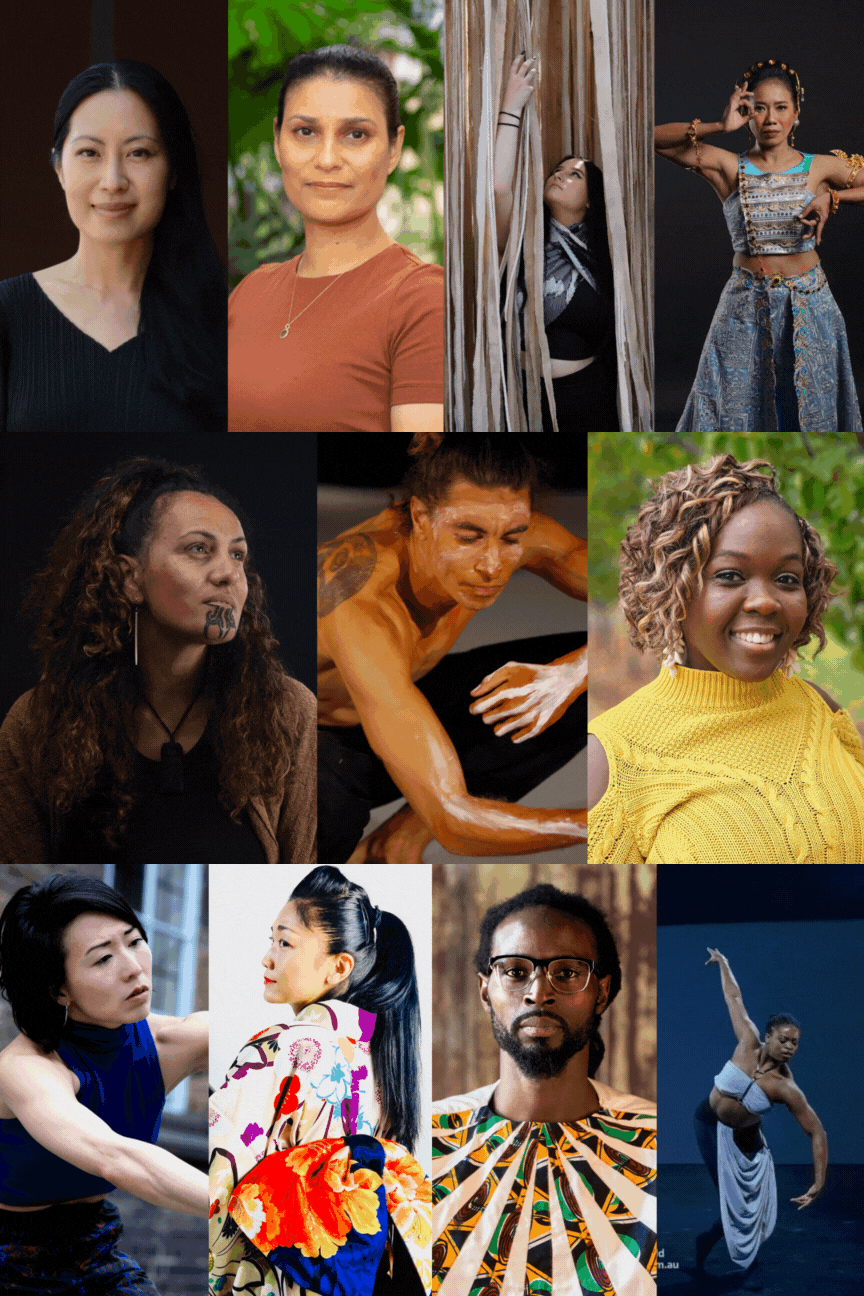
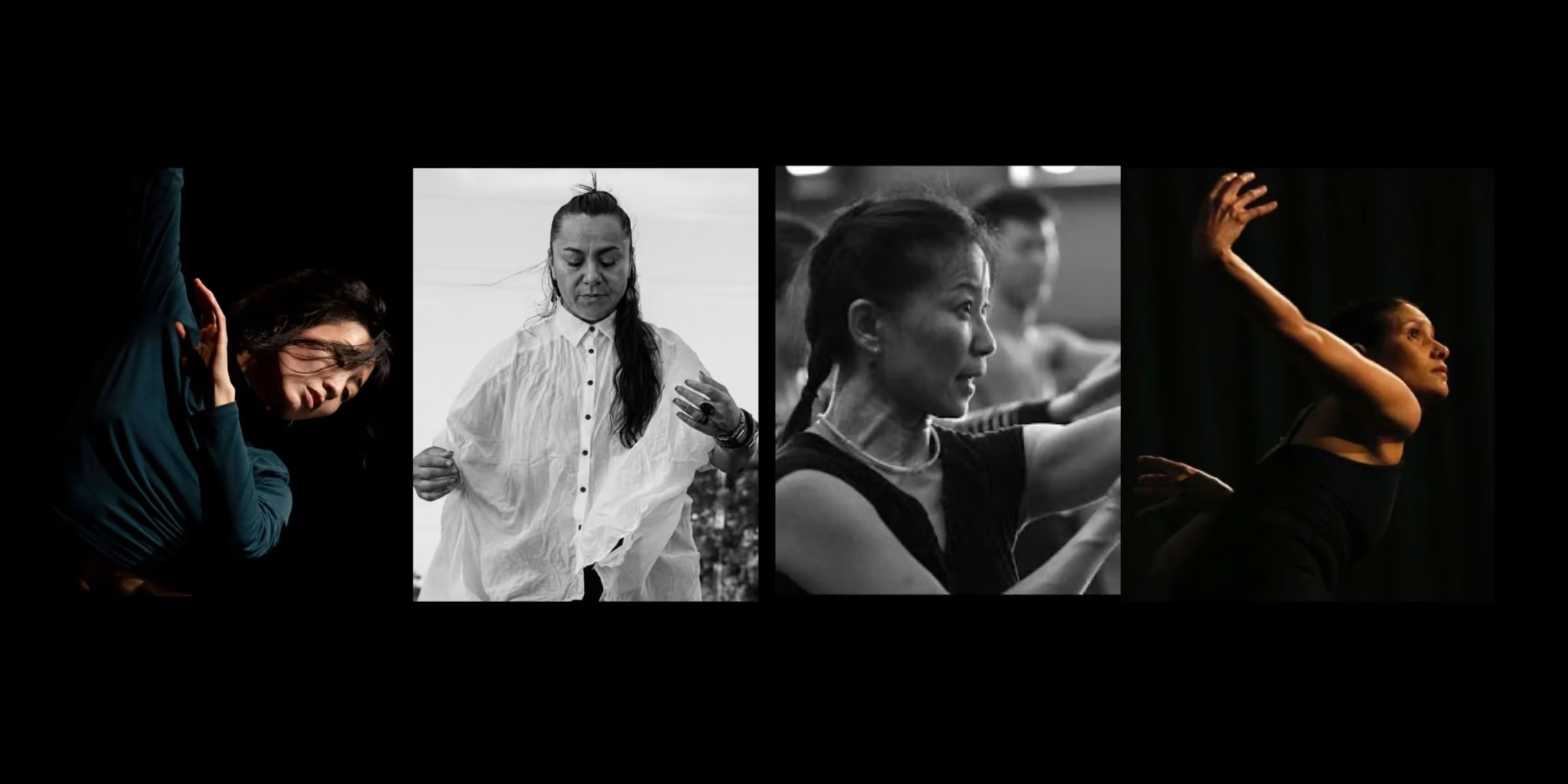
Cheng-Chieh Yu (Taipei National University of the Arts), Rheannan Port (University of Melbourne), Julie Ann Minaai (University of Melbourne), Dr. Tia Reihana (Waipapa Taumata Rau, University of Auckland), Facilitated by Professor Carol Brown
Generative Dancing Roundtables is a series of hybrid talks developed through a partnership between VCA Dance at the Faculty of Fine Arts and Music and Dancehouse. These facilitated conversations bring together dance practitioners and thinkers across live and virtual spaces. The Roundtables invite generative investigations of current choreographic practices, challenges and inquiries – fostering inter-generational dialogue and exchange between dancers, choreographers and pedagogues working across a diversity of genres, bodies and politics.
Each roundtable / panel talk will be recorded and released as part of the Generative Dancing Podcast Series hosted by Dancehouse.
This panel discussion is presented in association with Asia-Oceania Dance Forum & Exchange 2026.
Asia-Oceania Choreomapping and Journeys of Practices
Guest Speakers
Cheng-Chieh Yu (Taipei National University of the Arts)
Rheannan Port (University of Melbourne)
Julie Ann Minaai (University of Melbourne)
Dr. Tia Reihana (Waipapa Taumata Rau, University of Auckland)
Facilitated by Professor Carol Brown
Maps are undoubtedly a form of representation – claiming authority and asserting power over people and places – however when approached choreographically, mapping can also be a way of countering the dominant by recovering flows of story, movement and affect. In this choreomapping, multiple changing relationships between bodies in motion and the places and fluid terrains they dance within, are the focus. The panel brings together dance artists, pedagogues and researchers whose practices are shaped by migratory histories across Asia and Oceania. Each panellist will share how travelling and journeying inform their embodied practices, dance lineages and cultural knowledge.
Read More
About the Speakers
Cheng-Chieh Yu
Cheng-Chieh Yu’s choreography explores the expressive terrain of Asian diasporic sensibilities, investigating the intersections of culture, politics, gender and media through a postmodern dance lens. Rooted in BaGuaZhang, TaiChiDaoYin, and Contact Improvisation, her work transforms martiality into a site of dialogue, perception, and embodied inquiry. Her award-winning short film Martiality, Not Fighting has been recognized internationally, including the Dioraphte Jury Prize at Cinedans Dance Film Festival (Amsterdam, 2016) and Best Short Film at Dance Camera West (Los Angeles, 2015). Commissioned by institutions including La MaMa Experimental Theatre Club, Danspace Project, Jacob’s Pillow Dance Festival, Guangdong Modern Dance Company, Beijing Dance Company, and Taipei Dance Circle, Yu’s work has received support from the Asian Cultural Council, City of Los Angeles Department of Cultural Affairs, UC Humanities Research Institute, and Jerome Foundation. Currently, Yu serves as Professor and Chair of the School of Dance at Taipei National University of the Arts, sustaining a practice that bridges rigorous technique, conceptual inquiry, and imaginative experimentation.
Julie Minaai
Originally from Honolulu, Hawaii, Julie Ann Minaai is an international award-winning dancer, choreographer, rehearsal director, educator and artist of Japanese heritage. She completed her MA in Contemporary Dance from the London Contemporary Dance School, and was recognised as an Artist of Exceptional Promise by the Arts Council England. She has toured internationally (UK, US, Norway, Israel, China, South Korea, Colombia & Peru) performing, teaching and creating her own works. Since moving to Australia in 2021, Julie has worked with Meryl Tankard AO, Elena Kats-Chernin AO, Regis Lansac OAM, Form Dance Project, Configuration Company, Multicultural Arts Victoria, and Japanese art and music elders and communities including Noriko Tadano, Toshi Sakamoto, and Junko Azukawa. Julie’s interdisciplinary choreographic practice explores movement, storytelling, mask work, and puppetry through a Japanese diasporic lens, weaving dance, rhythm, music, ritual, and folklore to investigate cultural identity, migration, belonging, and ancestral memory. Julie is currently a Lecturer in Dance at the University of Melbourne’s Victorian College of the Arts (VCA), Australia.
Rheannan Port
Rheannan Port is a First Nations dance practitioner from the Lama Lama, Ayapathu, and Kuku Yalanji language groups of Cape York Peninsula, Queensland, Australia. Her ancestral connections extend to the rainforests, rivers, and reefs of both saltwater and freshwater Country. Based in Narrm on Kulin Nation, she has developed her professional practice through reciprocal relationships across dance, industry leadership, and mentorship. Her extensive work focuses on Indigenous dance pedagogy, cross-cultural collaboration, and choreography, and is grounded in Aboriginal worldviews, protocols, and values. Her dance-storying serves as a means of expression for cultural revitalisation, education, and healing. She is currently a Lecturer in Dance at the University of Melbourne’s Victorian College of the Arts (VCA), Australia.
Tia Reihana
Dr Tia Reihana is a dance artist, researcher, and educator whose work moves across choreography, performative installation, embodied research, and community-engaged creative practice. Working with movement as a form of listening, Reihana explores how breath, memory, land, and atmosphere move through and alongside us, tracing subtle shifts and exchanges between bodies, spaces, and the more-than-human. Dr Reihana has developed Te Mana Motuhake o te Kauri as a relational framework bringing together autonomy, embodiment, and environmental attunement within creative practice, with whakawhanaungatanga as its foundational relational methodology, guiding how people come together, listen, and share knowledge through embodied and reciprocal exchange. Dr Reihana is a Senior Lecturer in Dance Studies and Assistant Head of School (Māori) in the School of Creative Arts and Industries at Waipapa Taumata Rau, the University of Auckland, with more than three decades of experience across tertiary education, community arts, and international creative projects. She is also Co-Director of the Centre for Co-Created Ageing Research (CCREATE-AGE), examining how creative practice and arts-based approaches support people to remain connected, visible, and active throughout the life course.
Carol Brown
Carol Brown is a New Zealand-born choreographer, performer, and academic based in Melbourne, Australia. She is the founder and director of Carol Brown Dances and Professor of Choreography at the Victorian College of the Arts, Faculty of Fine Arts and Music, University of Melbourne. Brown’s work spans place-responsive choreography, dance-architecture collaborations, performance technologies, and interdisciplinary approaches to dance pedagogy. www.carolbrowndances.com