Dance (Lens) Mini 2026: VR
Virtual Reality program
1/3
TEA MAZE お茶の迷路 by Yumi Umiumare
Presented as a part of Dance (Lens) Mini 2026.
Local screendance XR artist Kim Vincs has scoured the world to find six iconic dance VR works to present at Dance (Lens) Mini.
These compelling Dance VR works challenge how we think about the body and digital connection. In an era dominated by AI and virtuality, these pieces test the limits of XR: do these technologies replace human presence, or do they uncover new ways to honour a dancer’s core practice?
Book a 60 minute session to explore two works each including …
— Thu 3 Dec: TEA MAZE お茶の迷路 by Yumi Umiumare; and Falling Worlds by Kim Vincs
— Fri 4 Dec: Constellation of the Flesh by Mária Júdová; and CYCLE by Amit Palagi and Matunda Grpoenendijk
— Sat 5 Dec: Nino by Ruth Gibson and Bruno Martelli; and Body Roll by Kim Vincs
After you’ve experienced the works, join Kim Vincs’ IN FOCUS: Virtual Bodies to hear more about the latest trends in dance VR.
Dance (Lens) XR Sessions (60 minute slots) available between:
- 1-7pm, Thursday 3 and Friday 4 December | Skylab
- 10am-4pm, Saturday 6 December | Sylvia Staehli Theatre — fully accessible
THURSDAY 3 DEC SESSIONS
TEA MAZE お茶の迷路 by Yumi Umiumare
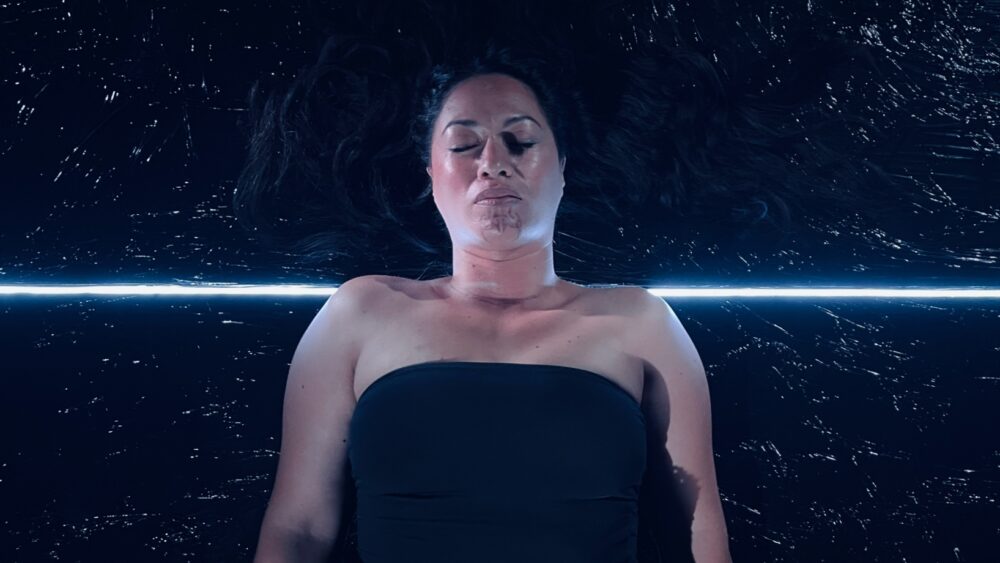
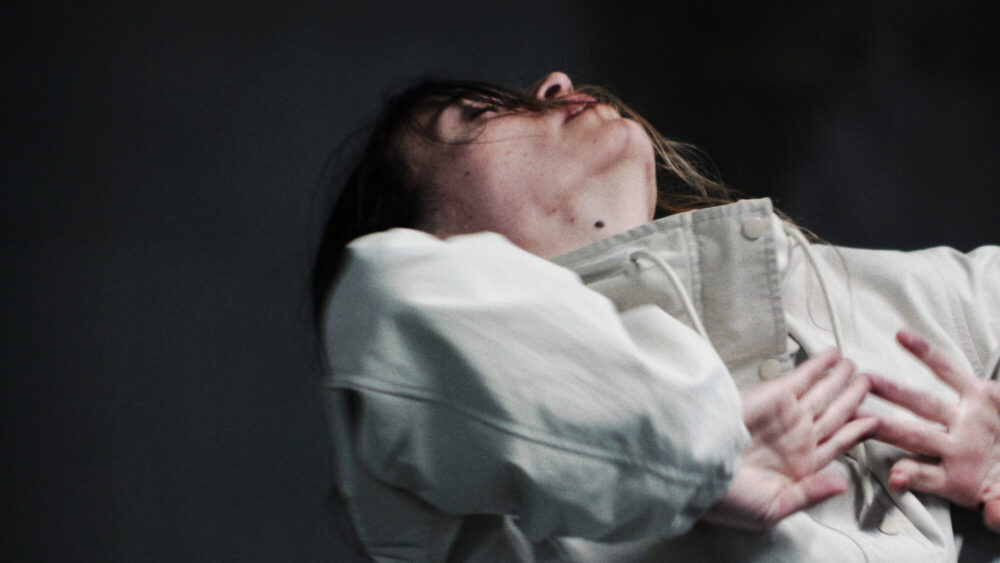
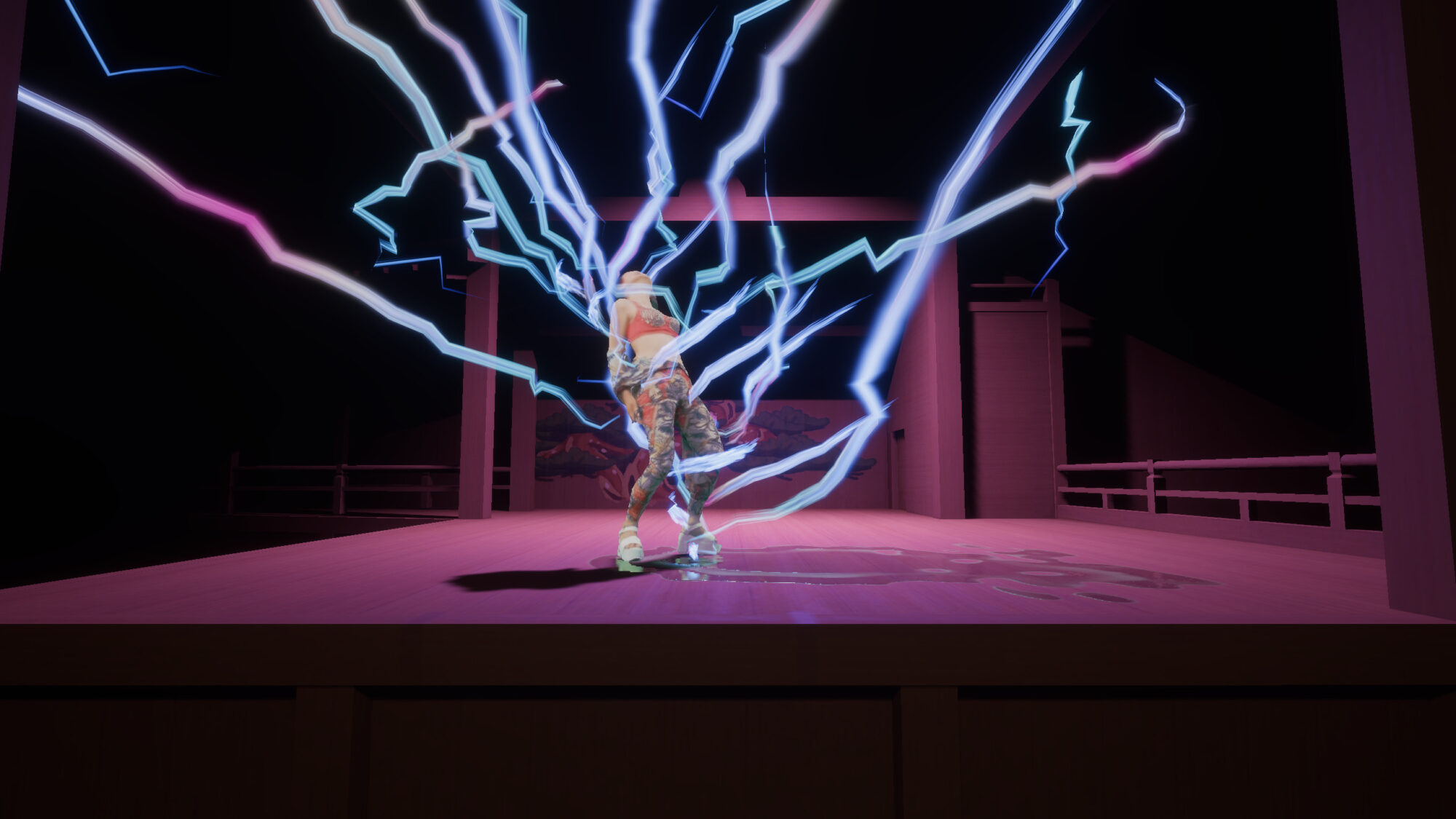
Created by Japanese-Australian performance maker Yumi Umiumare in collaboration with the Centre for Transformative Media Technologies, Swinburne University, TEA MAZE お茶の迷路 opens a magical portal through the simple act of drinking tea.
Entangling tea ceremony and old-world Kabuki mystique with volumetric 3D performance, this intimate VR experience summons the sacred power of female archetypes and deities. The audience is invited to enter a contemplative world of tea, ritual and immersive technology.
Punk, playful and exuberant, TEA MAZE お茶の迷路 is a profanely sacred ritual that invites an audience revolt of the spirit.
Creator & Performer Yumi Umiumare
Director & Producer John McCormick
Creative Director/Digital Artist Casey Richardson
Digital Artist Emrys McFerran
Composition and Sound Design Ai Yamamoto
Composition and Sound Design Dan West
Volumetric Research Lead Kim Vincs
TEA MAZE お茶の迷路 has been supported by Centre of Transformative Media Technology at Swinburne University, Creative Australia, Boroondara City Council.
Falling Worlds by Kim Vincs
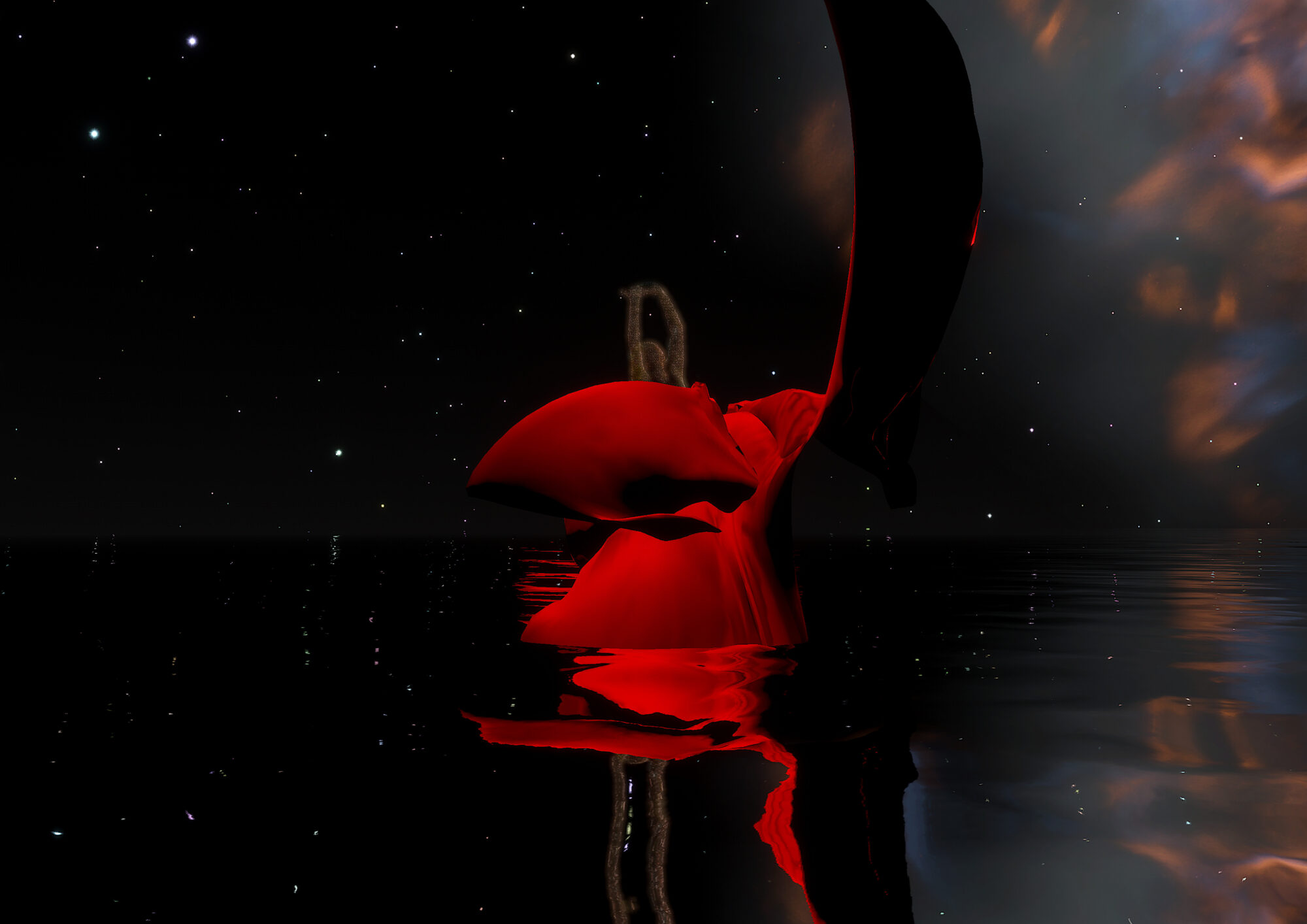
Falling Worlds is a haunting virtual reality journey that invites viewers into a meditation on fragility, beauty and the possibility of loss – of each other, of our planet, and of the world around us. Translucent, shapeshifting dancers created using volumetric motion capture navigate an uncertain universe, rising through stars and softly sinking into the depths of water, a poignant reminder of the fluidity of life and the inevitability of change. Meanwhile, as their world slowly disintegrates, evolves and reforms, they hold onto each other.
Director & Choreographer Kim Vincs
Performers Valentina Emerald, Jiawen Feng (=w=), Angelina Nicole, Katrina May Rank, Kim Vincs
Music Robert Vincs
Lead artists Emrys McFerran, Casey Richardson
Additional Vfx Adam Carr, Joshua Reason
Volumetric capture director John McCormick
Falling Worlds was created at the Centre for Transformative Media Technologies, at Swinburne University of Technology in Naarm (Melbourne), Australia. Research underpinning this work was supported by the Australian Government through the Australian Research Council’s Discovery Projects funding scheme (project DP22010211) – Holobody: advancing the future of mixed reality technologies.
FRIDAY 4 DEC SESSIONS
Constellation of the Flesh by Mária Júdová
Constellation of the Flesh is an immersive VR experience inspired by the trance states of Buryat shamans and a rare gathering of shamans that took place in a sacred location between Mongolia, Siberia and China in the late summer of 2019.
Focusing on the choreographic expression of trance within shamanic movement, the work explores the relationship between the physical body and its digital transformation. Through dance and immersive virtual environments, the human body shifts, transforms and transcends its physical boundaries, inviting viewers to reconsider their perception of movement, presence and embodiment.
The extended version also offers an opportunity to explore the creative process and contextual material surrounding the work.
Art Direction Choy Ka Fai & Mária Júdová Tichá
Concept and Research Choy Ka Fai
3D Visual Design Mária Júdová Tichá & Florian Friedrich
Music Composition and Sound Design Tseng Yun-Fang
Dance and Motion Capture Yurika Yamamoto & Susanne Grau
Project Manager Mara Nedelcu
VR prototype supported using public funding by Slovak Arts Council.
CYCLE by Amit Palagi and Matunda Grpoenendijk
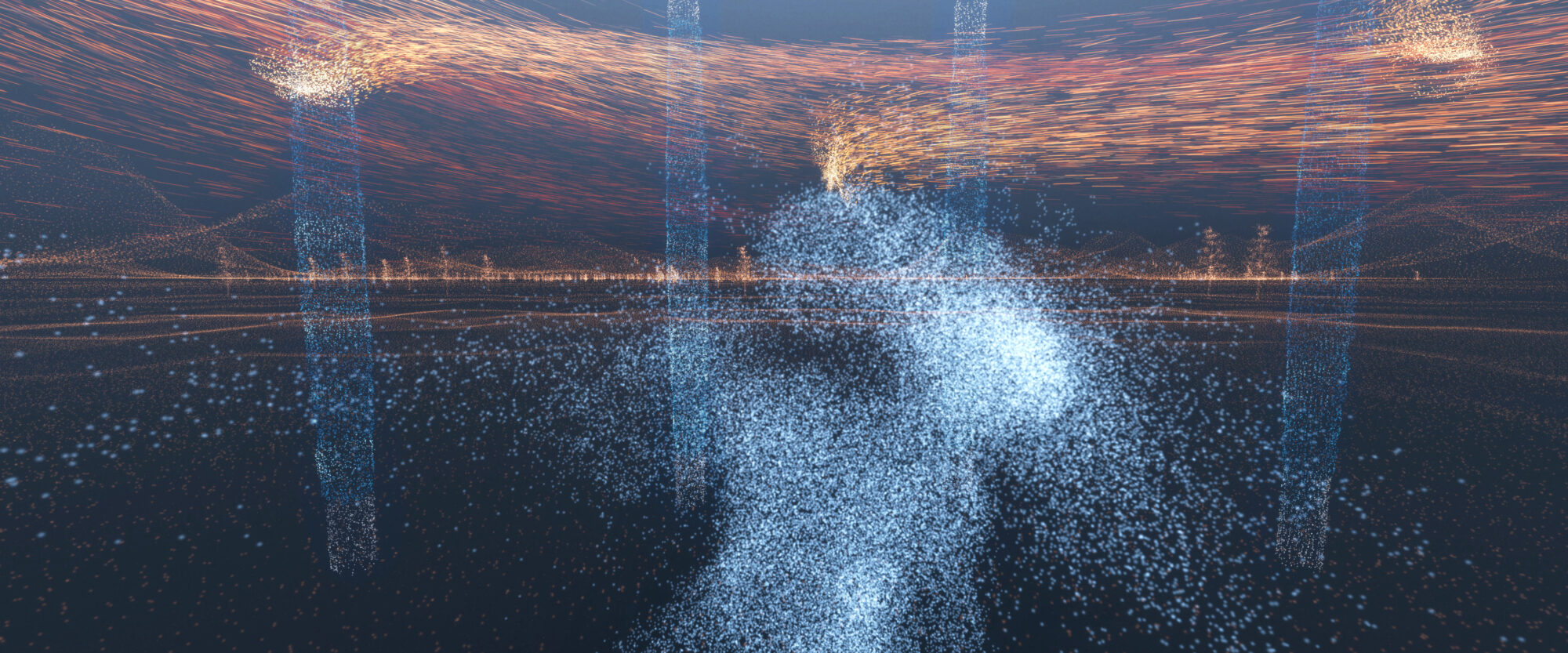
CYCLE is a VR poem that aims to let one experience the patterns and cycles in life. With dance at its core, CYCLE invites the audience to sense their own life cycles and their connection to cosmic rhythms that magnifies daily cycles, death and birth, encouraging visitors to ask: how do you shape your life cycle?
Cycle starts with three words: endlessly, we repeat, alone. Depending on how you order them, you craft a personalised sentence – and also the order of the scenes of the experience. A full poem then emerges and the virtual experience begins. Our collaboration started with the question how we can offer a new perspective on the patterns and cycles in our lives?
Virtual reality allowed us to merge our performative and visual arts to address the cosmic universal looping and repeating of time, bodies, and lives. Cycle offers the aliveness and playfulness of the human body in virtual space.
CYCLE has been supported by Stimuleringsfonds, Playgrounds, Innovationlab, Future storytelling lab, and Cinedans
SATURDAY 5 DEC SESSIONS
Body Roll by Kim Vincs
What if your body could move the world? Body Roll is an immersive virtual reality experience blending gameplay, dance, and exploration into a dynamic playground that responds to your every movement. Developed through dance technology research at the Centre for Transformative Media Technologies, the project introduces Volumetric Interaction—an innovative digital interface designed to intuitively capture whole-body movement. By prioritizing accessibility, Body Roll creates a joyful, inclusive space for movers of all abilities to connect with their bodies and explore their unique physical expression.
Director & Choreographer Kim Vincs
Research Team Kim Vincs, John McCormick, Pajani Mardamootoo, Jeni Paay, Rachael McDonald
Software Developers Joshua Reason, Haydon Bakker, Adam Carr
UX Designer Haydon Bakker
Technical Artist Casey Richardson
Visual Artists Casey Dalbo, Emrys McFerran
Music Robert Vincs
Body Roll was created at the Centre for Transformative Media Technologies, at Swinburne University of Technology in Naarm (Melbourne), Australia. Research underpinning this work was supported by the Australian Government through the Australian Research Council’s Discovery Projects funding scheme (project DP22010211) – Holobody: advancing the future of mixed reality technologies.
Nino by Ruth Gibson and Bruno Martelli
Shadows play
on weathered textures,
landscapes both natural and surreal.
Light dances
on surfaces,
virtual and visceral.
Avatars breathe,
embodying the earth,
the sky,
and the storm within,
drifting between worlds—
animated by the unseen currents
of a dancer’s breath,
captured in the pulse
of motion.
The Novacene is the conceptual lens through which nino frames anxiety about AI, as well as issues of identity & connection prevalent in contemporary society and promotes a future characterised by increased connectivity, a return to the body, and a reconnection with the environment. The novacene, proposed by scientist James Lovelock, originator of the Gaia theory, describes a hypothetical new geological era succeeding the Anthropocene, one in which ultra-intelligent, self-improving artificial systems become the dominant force shaping Earth’s biosphere. Through the use of virtual incarnation and social interaction, an immersive experience is created, facilitating connections and collaborations with the audience. Technology, including real-time motion capture, AI, and game engines, is employed to develop avatars and environments. The unconventional body types of the avatars invite consideration of how we define ourselves and how those definitions evolve interactions in virtual spaces. Developed from a 45min live performance during a residency at Trafó, Budapest, the user becomes at once the author and the viewer of the artwork, in this speculative simulation -an unconventional gamelike experience.
Creators Ruth Gibson, Bruno Martelli
Dancers Eszter Gál, Csilla Gesztelyi Nagy, Balázs Oláh, Mar Serra Martí, Helén Tamaskó, Robert Anderson, Ally Clarke, Ruby Portus, Zara Philips
Music Mechanoid Muse (Marcus Villaca), Casually Here (Nic Nell)
Sound design Nic Nell
Dramaturg/Vo Catherine Duquette
Costume Kitti Laposa
Nino has been supported by MODINA, Creative Europe program of the European Union, SIN Arts Centre, MotionBank/CCL University of Applied Sciences Düsseldorf (HSD), Trafó Kortárs Művészetek Háza, Budapest. Special thanks: Liza Nagy, Naoto Hieda, William Ruddock Primett, Ulrich Schrauth & London Film Festival Expanded. Unreal developer: Bruno Martelli.
Read More
Kim Vincs is a dancer, choreographer and immersive media artist. She has created over 20 digital technology works spanning dance, motion capture, volumetric capture, AR/VR and digital scenography. She is also a leading Australian art/technology researcher with 8 Australian Research Council projects and 50+ industry projects across dance technology, motion capture, virtual and augmented reality, immersive and interactive media and creative robotics. Kim has an MFA in Dance from Mills College, Oakland, California and a PhD in Dance from Deakin University and is an Adjunct Professor at Swinburne University of Technology’s Centre for Transformative Technologies.
Yumi Umiumare is a Japanese-born, multi-award-winning performance maker and creator of Butoh Cabaret, integrating ritual practices including the Japanese tea ceremony. For over 30 years, she has developed a distinctive practice that evokes visceral emotion through narrative, abstraction, ritual, and humour, exploring cultural identity across traditional and contemporary life. Her internationally acclaimed works have been presented across five continents. Her socially engaged practice includes collaborations with First Nations communities, refugee communities, and people with disability through inclusive arts practices. She is Artistic Director of ButohOUT!, a recipient of an Australia Council Fellowship, multiple Green Room Awards, and the Melbourne Fringe Living Legend Award, and is a significant contributor to the contemporary global Butoh scene.
www.yumi.com.au
Mária Júdová is a Slovak visual artist exploring the creative potential of technology through interactive installations, XR experiences and audiovisual performances. She holds degrees in Digital Media from the Academy of Arts (SK) and Audiovisual Studies from FAMU (CZ), and studied at École de recherche graphique (BE). She has collaborated with institutions including Rambert Contemporary Dance Company (UK), Choreographic Coding Lab (DE) and Yamaguchi Center for Arts and Media (JP). Her work has been presented internationally at the V&A Museum, Japan Media Arts Festival, Cinedans, SIGGRAPH and Berlin Atonal, and has received awards from Japan Media Arts Festival and B3 Biennale.
Choy Ka Fai is a Berlin-based Singaporean artist whose multidisciplinary practice explores the intersections of dance, technology, visual anthropology and performance. His work investigates the transformative potential of movement and the relationship between the physical and spiritual body. In 2019, he initiated CosmicWander, an ongoing research project exploring Asian shamanic dance practices through field research, choreography and immersive technologies. His works have been presented internationally at institutions and festivals including Tanz im August (DE), Kyoto Experiment (JP), Singapore Art Museum (SG) and the Biennale of Sydney (AU). He holds an MA in Design Interactions from the Royal College of Art, London.

Co-presented by Dancehouse and the Centre for Transformative Media Technologies, Swinburne University of Technology